

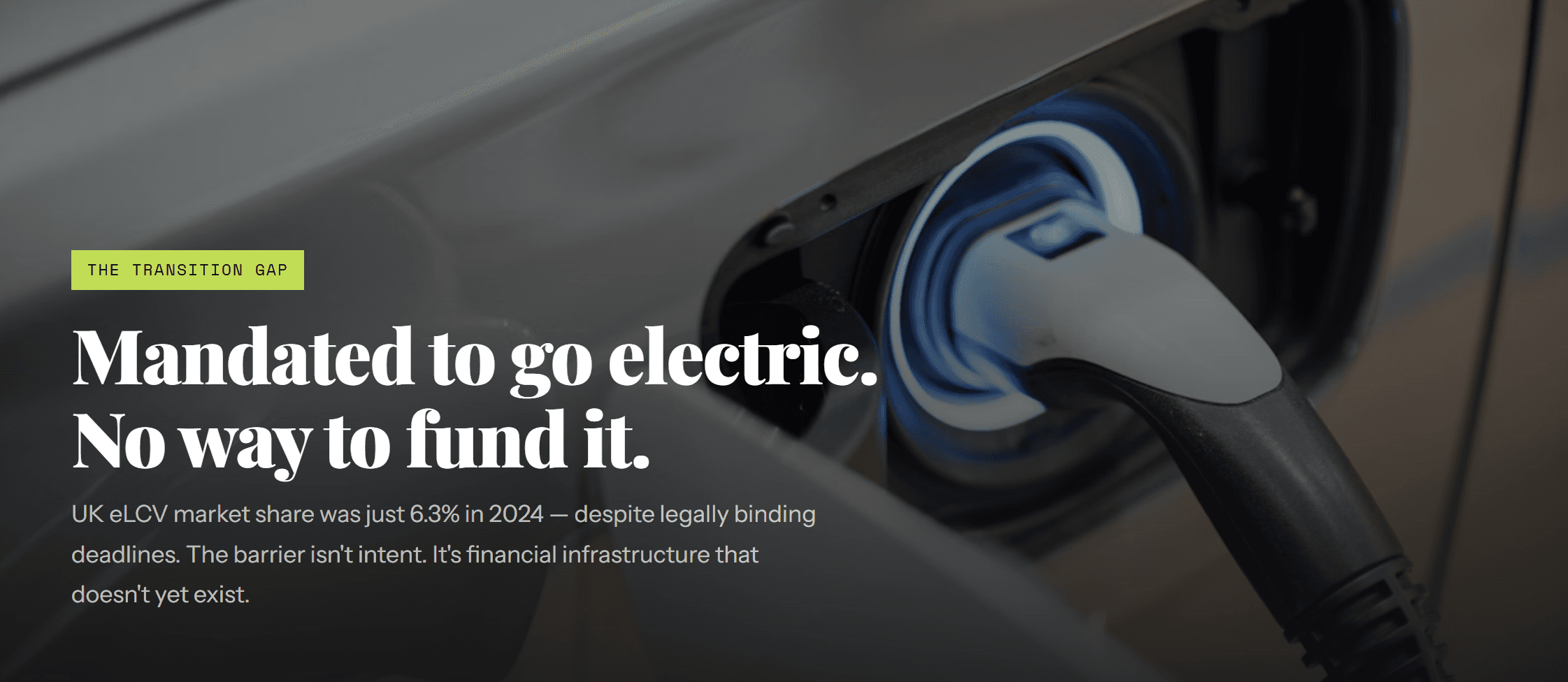
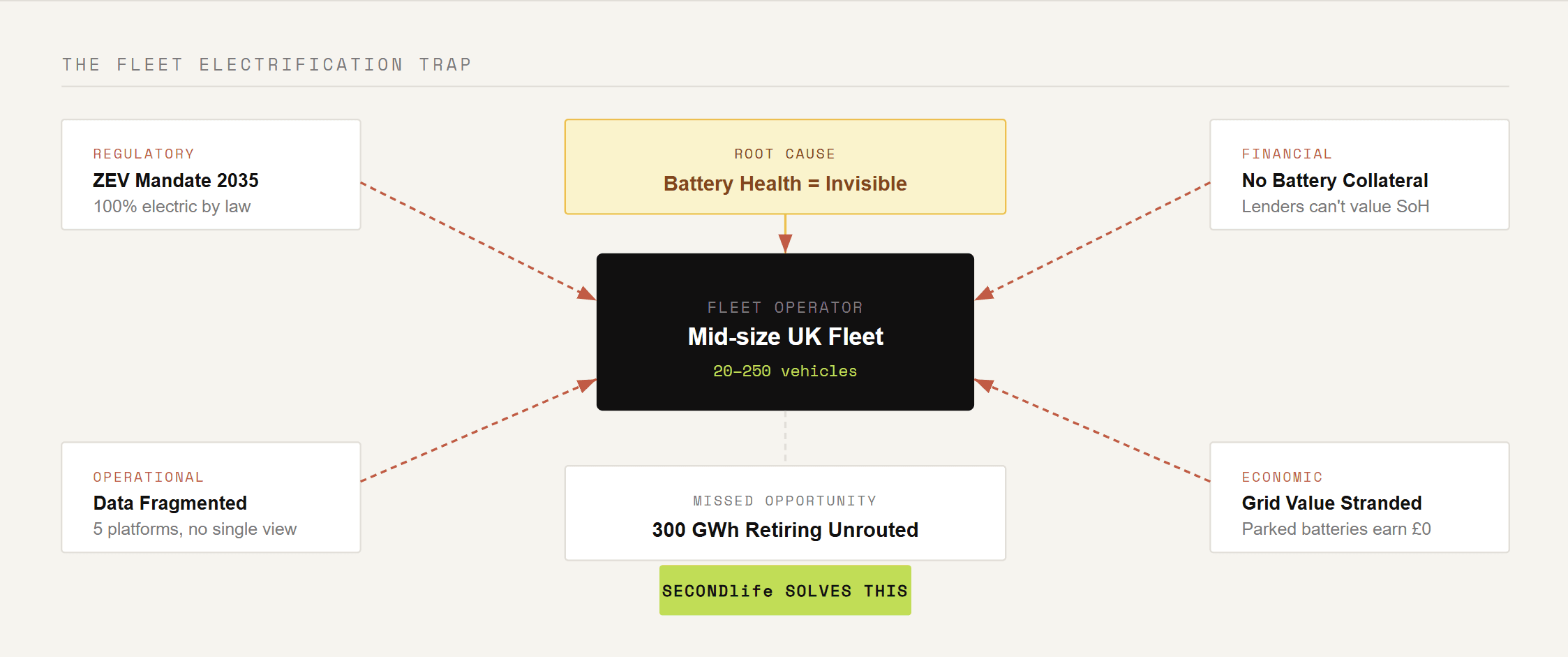
By 2035, all new UK commercial vehicles must be electric, but for most fleet operators, the transition cost runs into the millions with no clear path to funding.
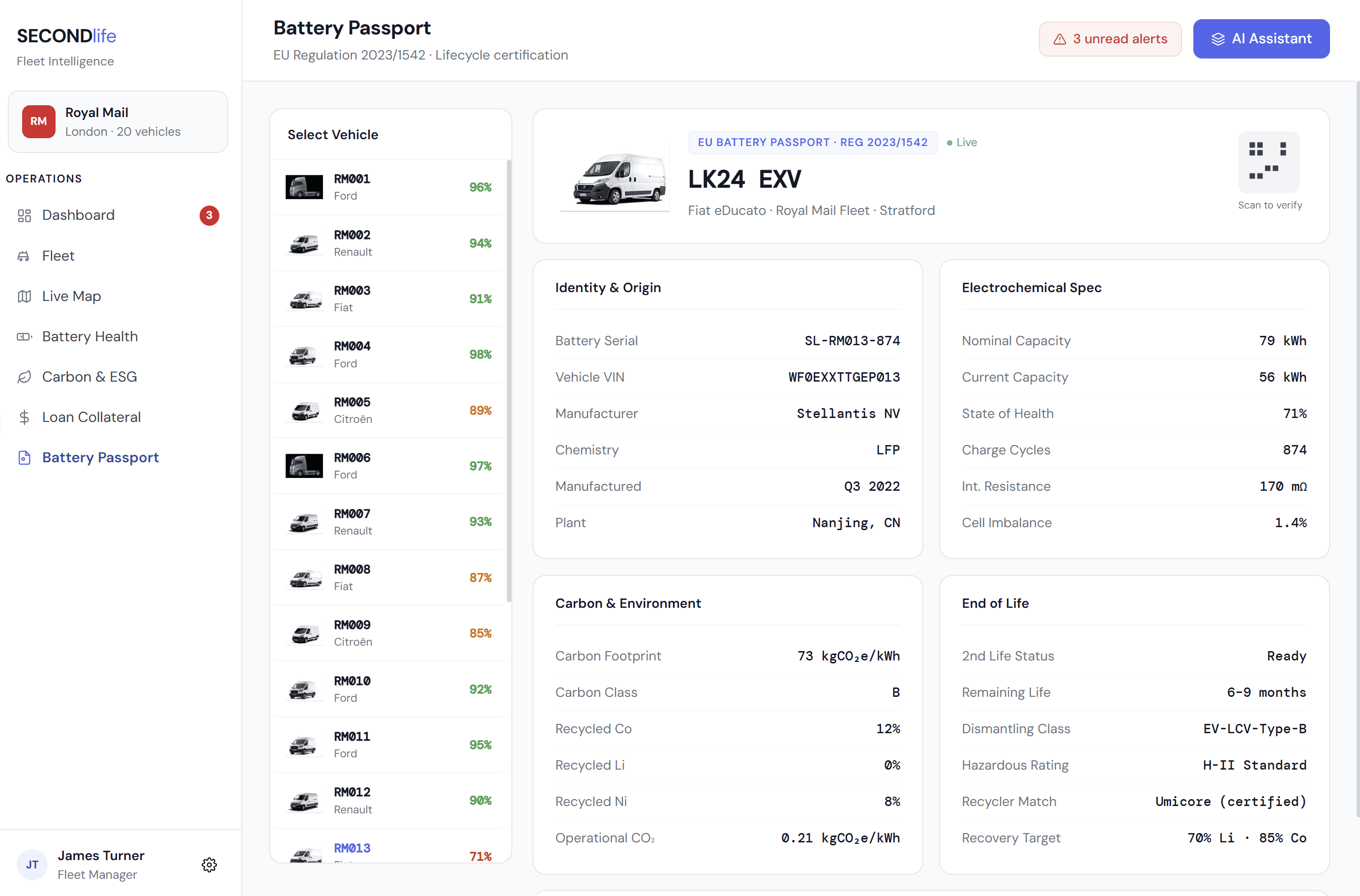
Batteries account for 40–60% of an EV's replacement value, yet no lender can properly price them without certified health records. They are the asset, and they are invisible to finance.
Meanwhile, parked fleets sit on untapped grid capacity every night. That energy has real market value. No one is capturing it.
Capital Barrier
Without certified battery health data, lenders can't price EV fleet risk — and competitive transition financing stays out of reach.
Financial
Battery Health Unknown
State of Health (SoH) is the single most critical metric for EV asset valuation — yet no platform produces certified records that lenders will accept as collateral.
Technical
Second Life Unrouted
300 GWh of batteries retire by 2028. Without health provenance data, they can't be valued, graded, or routed — to second life storage, VPP deployment, or recycling.
Circular Economy
Market Opportunity
£500M+
Total Addressable Market across three growth rings
5M+
UK commercial vehicles mandated to electrify by 2035
300 GWh
Battery capacity retiring globally by 2027–28
2027
EU Battery Passport mandatory deadline


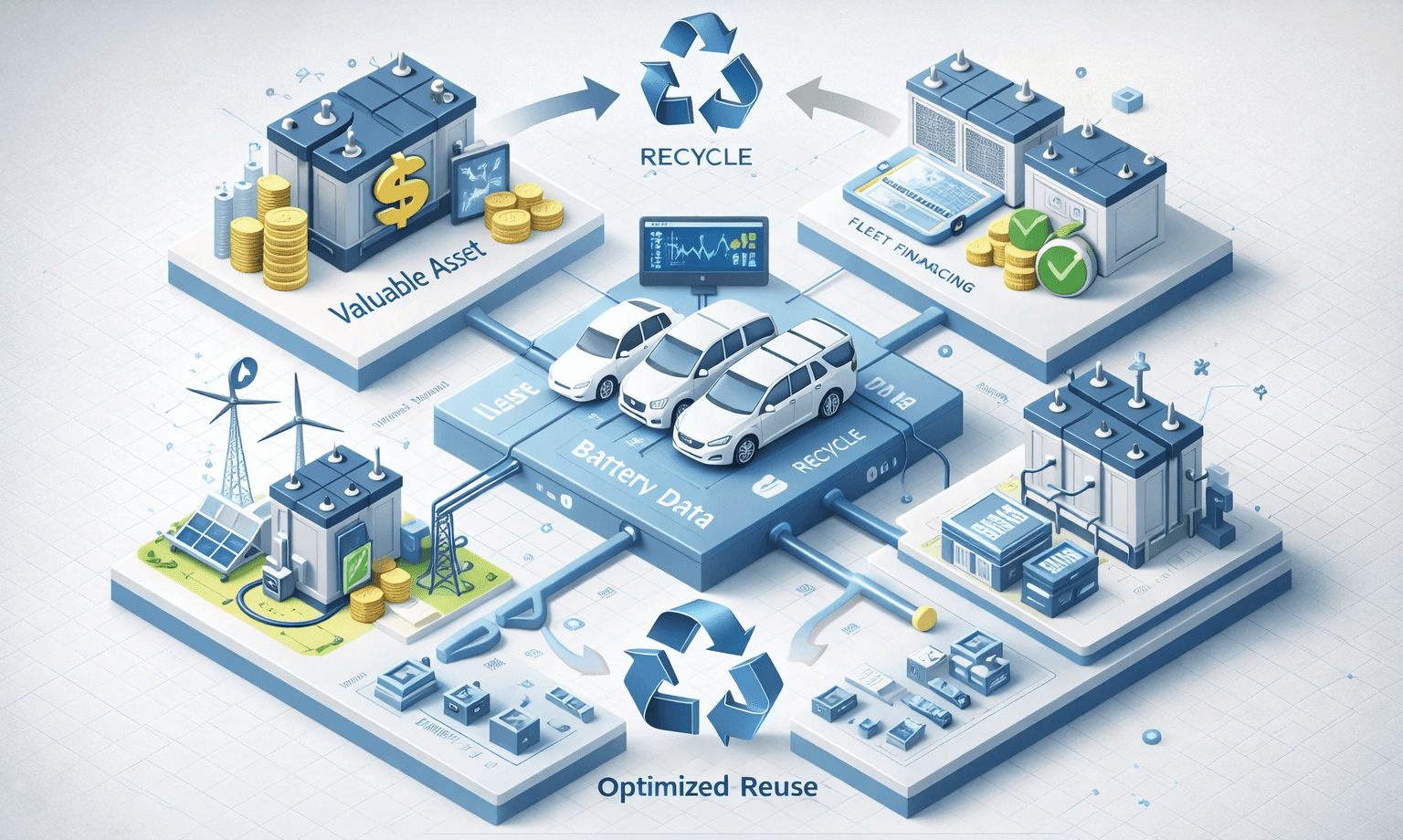
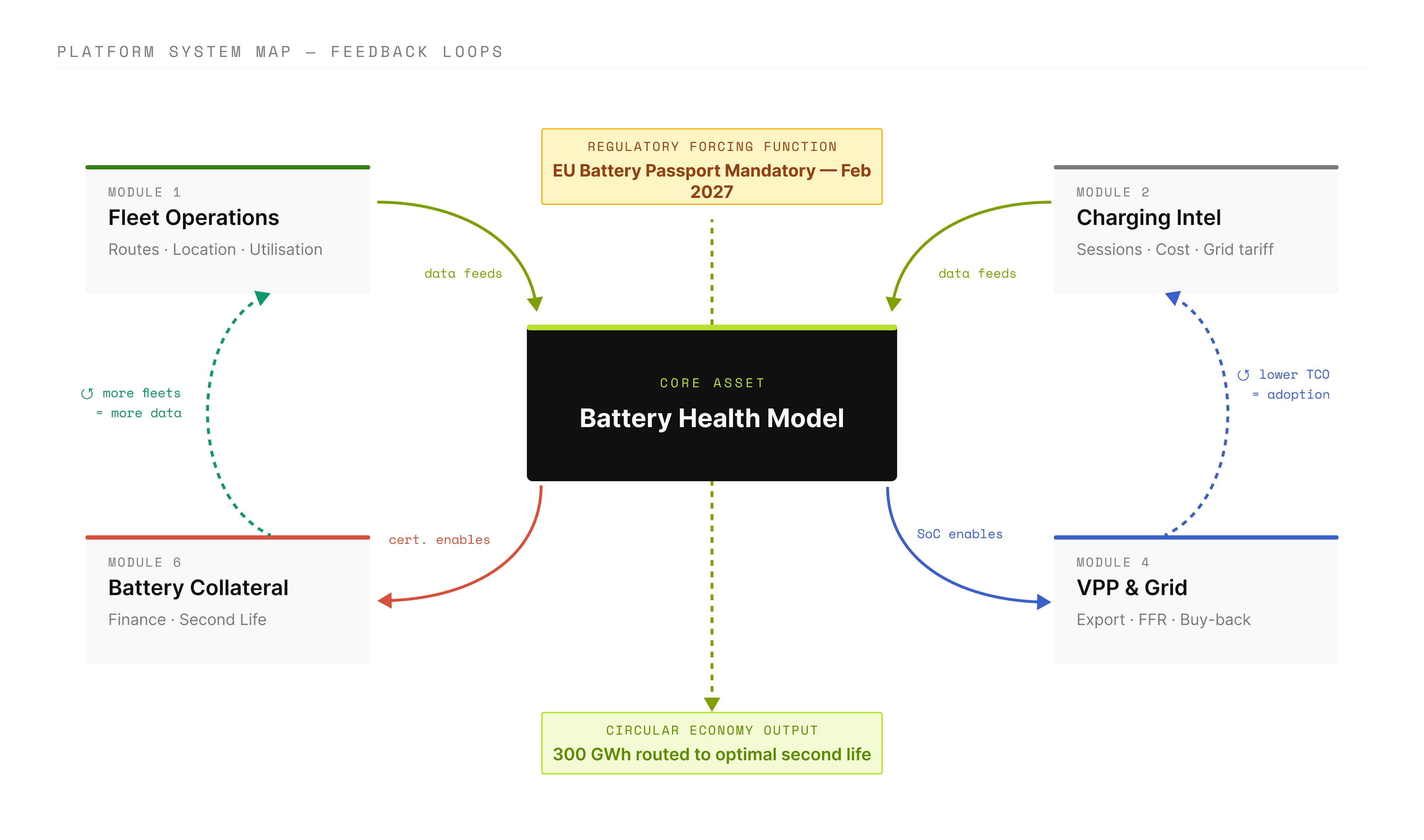
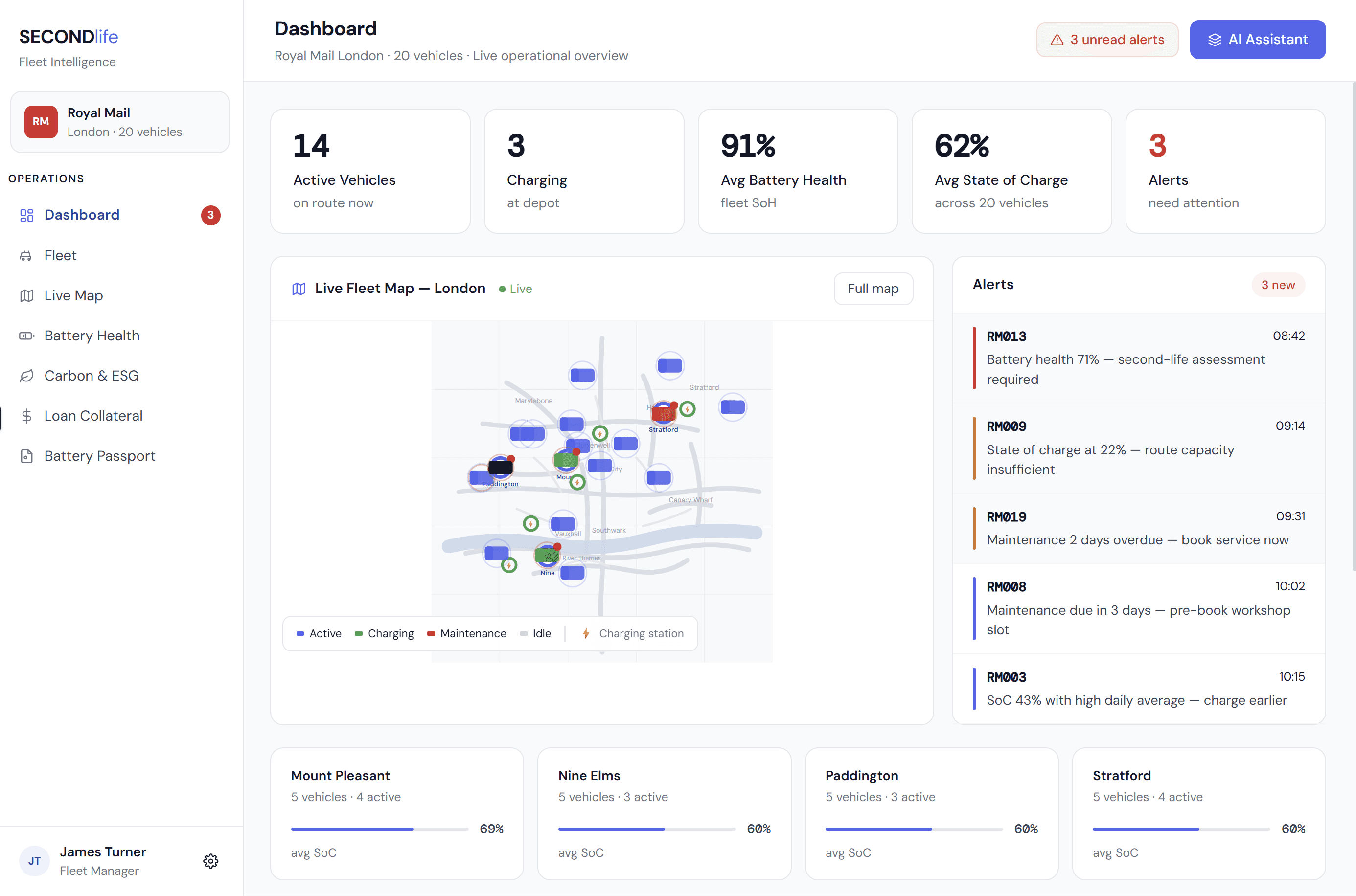
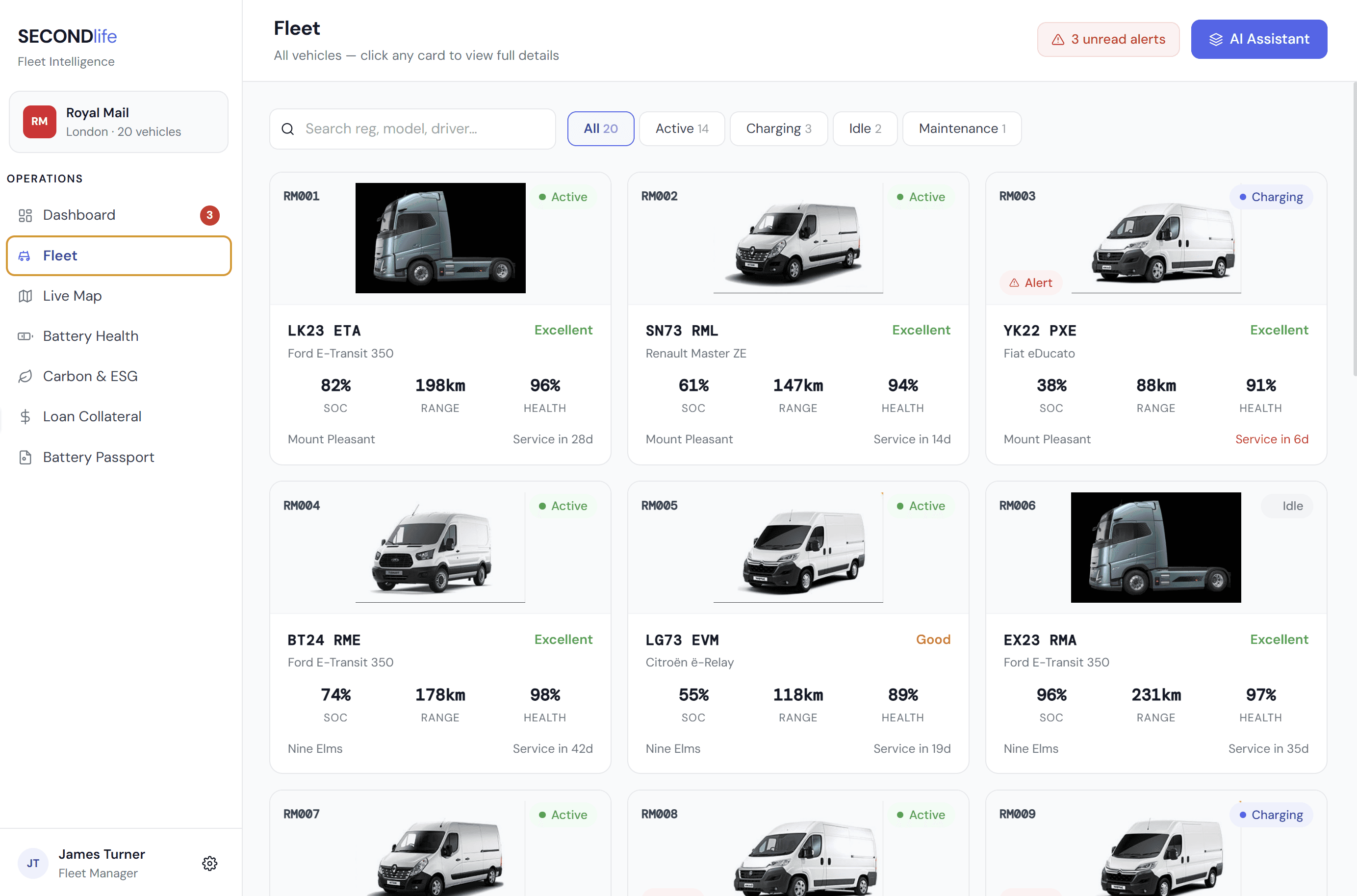
Fleet operators will try SECONDlife because it cuts costs. They'll stay, and pay more because it turns their batteries into money: certified health data that unlocks loans, idle vehicles earning from the grid, and financing that grows with the fleet.


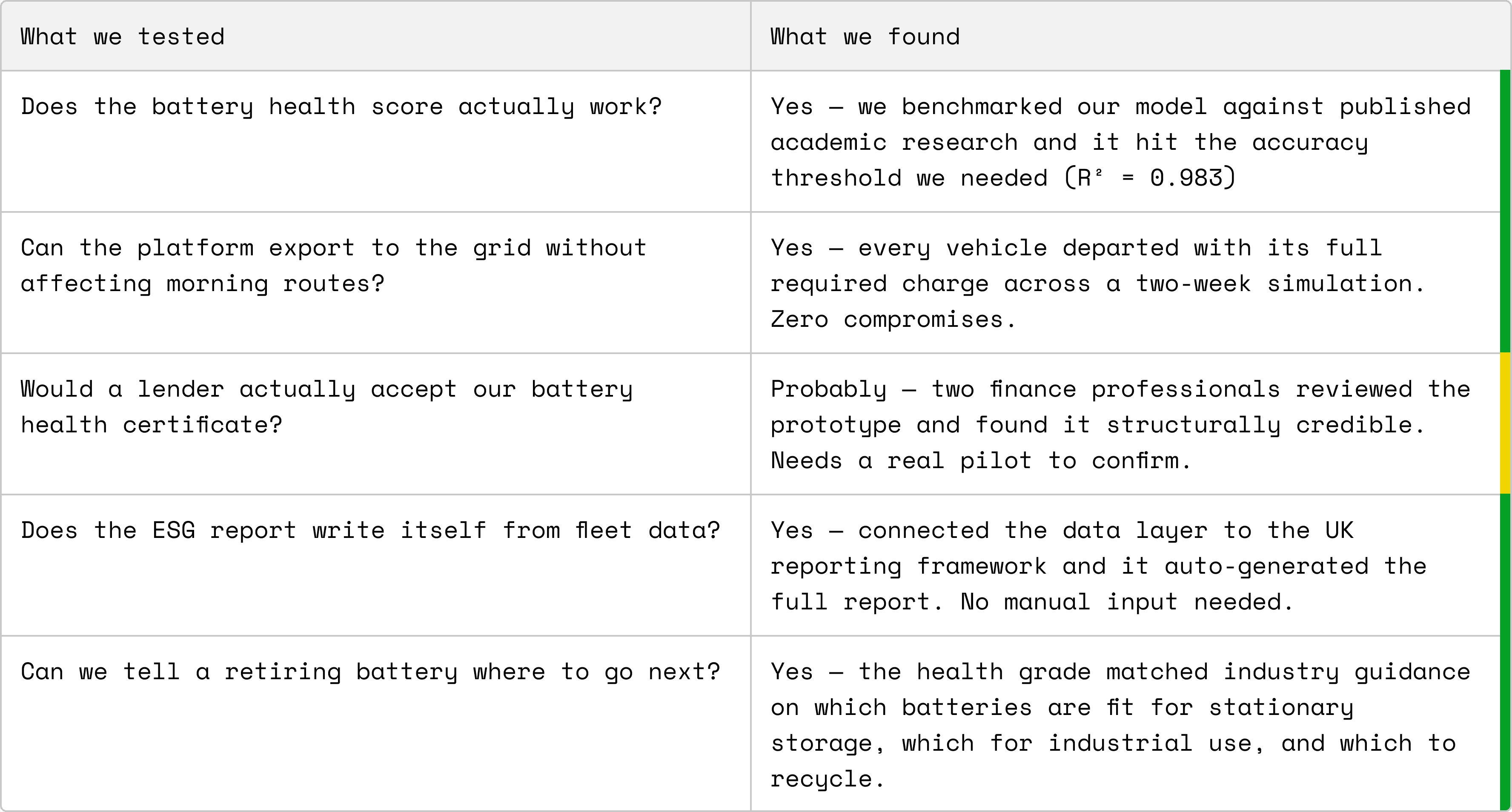
Virtual Power Plant (VPP) Model - Future plan

Fleet vehicles return to depot
SECONDlife logs each vehicle's SoC, planned routes, and departure times. Calculates available dispatchable energy above operational minimums.

VPP responds to grid signals
SECONDlife logs each vehicle's SoC, planned routes, and departure times. Calculates available dispatchable energy above operational minimums.
Off-peak smart charging overnight
Agile tariff integration ensures vehicles charge during the cheapest grid windows, typically 3–7× lower than peak rates.


Every vehicle departs fully charged
Fleet operators see full battery reports and revenue summaries each morning. Routes are never compromised by grid participation.